ttheMOVEMENT - THE POWER OF YET

Saturday, June 7, 2014

WHAT DO YOU DO FOR A LIVING?

So, what do you do for a living?  I am a Positive Psychology Coach, Leadership Coach, Leadership Development Consultant and a Professor of Leadership and Organizational Development.  That's a mouthful!!!

I recently had a conversation with an acquaintance who nearly swallowed his gum when I mentioned Coaching as one of the things I do for a living.  After a short conversation with him, I was reminded about the many misgivings about real Coaching.  I thought I would use this post to explain why people work with coaches, the value I offer to coaching clients and the process I use to drive results.

Why people work with a Coach?
A client works with me because they want to take action towards achieving their goals.  They may feel uncertain of what the next steps are, or are experiencing issues at work, or are going through a transition.  Whatever the issue, they trust me to help them work through it.  I have the benefit of viewing the clients circumstance from a distance, similar to a basketball coach who sees the game from the sideline.  This meta-view facilitates objectivity and perspective for the client.

What is Coaching
I like this definition provided by Positive Acorn, coaching is a relationship between two people in which one party, the coach, asks powerful questions and develops a system of accountability in order to help the other party acquire personal insight and information necessary to move toward a goal.

"Coaching is a relationship between two people..."
The coach and client grant power to a third unit, the relationship.  The client sets the agenda, chooses the goals and determines the best way to reach success.   The coach holds them to these things and acts to support the client's creative thinking process. The client is in turn empowered by the relationship and is able to move forward in achieving their goals.  

"the client acquires insight and information necessary to move in a positive direction towards a goal through powerful questions and accountability."
The coach is there to facilitate a conversation that prompts the client to think in new ways and gain perspective, to help them remember past experiences of success and failure and understand how that information might be useful in the current situation, to assist them in brainstorming next steps, and finally, to hold the client accountable for their action or lack thereof.

What is Positive Psychology Coach?

I am a trained and Certified Positive Psychology Coach.  Positive Psychology is the scientific study of 
what makes life most worth living.  Positive Psychology is often referred to as "The Science of Happiness". It is a call for psychological science and practice to be as concerned with strengths as with weaknesses; as interested in building the best things in life as in repairing the worst; and as interested in making the lives of normal people fulfilling as with healing pathology.

A Positive Psychology Coach is one that has a positive focus, utilizes the benefits of positive emotion and uses the science of strengths to increase the overall wellbeing of their clients.

As a coach, I am trained to facilitate a conversation.  Its my job to help you, the client, gain insight into what is needed in order to move forward with your goals.  I approach the relationship believing the client is the expert on their own lives and that it is more powerful for clients to draw their own conclusions than to be given the answers.  

Coaches work with clients who are whole, resourceful and able generate ideas towards solutions and goals.  If a client experiences depression or other psychological disorders they are referred to an appropriate professional to be diagnosed and treated.  I do work with clients dealing with a psychological disorder as long as they are being treated by a professional and if they are not experiencing the debilitating effects of their diagnosis.

Get it?
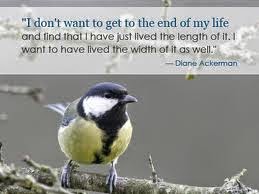
Positive Psychology Coaching is a revolution in the understanding of how the study of psychology can support and drive the best things in life and help us to achieve our goals.  It is an understanding that we should put as much attention and energy into identifying and developing personal assets as we do with deficits.  Positive Psychology is a science based on Psychology, Psychotherapy, Appreciative Inquiry and Solutions Focus to help people thrive and live more fulfilling lives.  This is why I have chosen to serve others as a Positive Psychology Coach.


Sunday, May 25, 2014

PONDERING LEADERSHIP AND THE CONSULTANT?

Sorry I've been away so long.  I've been in the lab developing curriculum for some new leadership
development programs I will be facilitating.

I had a great conversation with a colleague last night who is completing her Masters in Leadership Studies.  Always a thrill for me when I get to talk leadership with others who have a deep understanding of the field.

We chatted about how leadership development is the new "buzz" term in so many industries.  I've mentioned in the past that if I ask 100 people "what is leadership", I will get 100 different answers.  One of the reasons that leadership development is such a popular topic at the moment is that most seem to understand that leadership is a skill and not a trait.  As such, it can be taught and developed and everyone wants to develop those in organization to drive performance through leadership.  The challenge is that there is a gap between this understanding and how to actually facilitate the development of leadership.

I work with many sport programs at colleges and universities who boast leadership development as a by-product of the sport experience.  For this leadership development to occur it is fundamentally important that program managers understand the development they are trying to facilitate.  This starts with a firm understanding of what leadership is.

Leadership can be defined as 'a process whereby an individual influences a group of individuals to achieve a common goal' (Northouse, 2001, p.3).  First, leadership is a process indicating that it is something we do, an interactive occurrence between leader and follower.  The leader affects and is affected by followers making leadership an interactive process and not a unilinear event.  Leadership involves influence which deals with how the leader affect the followers.  If there is no influence, leadership does not exist.  The third component is that leadership occurs in groups, which provides context for leadership to occur.  The final component of leadership is goals and that leadership is concerned with guiding a group of individuals towards a goal. (Loughead & Hardy, 2004)

I share this info in many workshops so everyone is on the same page with their understanding of leadership.  It's difficult to effectively develop something when the understanding of the subject is wrong or unclear.

In yet another conversation last night a friend could not understand why corporations spend millions of dollars a year on Leadership Consultants.  Upon reflection, I believe that it's one thing to understand leadership inherently or even to understand the definition I have provided above.  It is yet an entirely different challenge to now be able to effectively facilitate an applied, contextual understanding of leadership.

The clients with whom I work benefit from the metaview that I bring to their organization or project.  I have the opportunity to take an objective, high level perspective.  The perspective I take is similar to viewing the organization or project from a helicopter, where I can see things from a distance.  Similar, to a basketball coach who sees opportunities and provides insights the athletes to not have because the coach has the benefit of viewing the game from the sidelines.  I'm not caught up in the day to day tasks, emotions and issues that promote a loss of perspective.

Finally, I think one of the most valuable services that Leadership Consultants bring to an organization is the ability to synthesize research.  Many assigned leaders are mired in the administration and tasks of their jobs and do not have the time, interest or resources to flush out new and improved ways to drive transformational leadership with their constituents.  Leadership studies is interdisciplinary.  Leadership studies takes from Philosphy, Sociology, Psychology, Management, and even Quantum Physics!  There is new research being done daily and new findings discovered daily.  So leadership is a bit of a moving target, the discipline grows on a daily basis.  It's important to have people who immerse themselves in keeping up with new research and findings and synthesizing that information for the practical applied use of their clients.    If not for this kind of a practice we would still be in the dark ages with regard to our understanding and application of leadership.

These are some of the reasons why leadership consultant are an important part of organization and team performance and development.

Tuesday, March 25, 2014

LEADERSHIP CHRONICLES - WHAT IS LEADERSHIP?

Recently I had the opportunity to facilitate a leadership workshop for the Specialized High Skills Major students at Oakwood Collegiate Institute in Toronto.  Oakwood is an excellent public school for those interested in strong academics and arts, Oakwood has also boasted one of the best boys basketball programs in Toronto for a long time.

I love facilitating these kinds of workshops.  Each group presents their own unique challenges as I try to facilitate the learning of certain outcomes and at the same time make the session engaging and interactive for the participants.  I find that by the end of a session I've learned as much or more than the participants.

The learning outcomes for the leadership workshops were: 1. develop a clear understanding of what is leadership; 2. connect students with the behaviours of Exemplary Leaders; and 3. do some skill building around the Kouzes and Posner's second law of leadership "Leadership is a Relationship".  The session was fun and interactive and many students commented on how much they learned.  A few students in particular told me that they didn't know what to expect or really understand what leadership was when they signed up for the session.  The session provided them with enough information to drive their curiosity to further develop their understanding of leadership.

I've learned over time that if I ask 100 people "What is leadership?", I will get 100 different answers.  Thus the first and most important learning outcome goal for the Oakwood session.  How can these intelligent, vibrant, creative, inquisitive students become better leaders if they have no clear or accurate understanding of what leadership is?  How many times have you or those you know used the word leader or leadership in a sentence when speaking about someone abilities or lack thereof?  Was everyone in the conversation talking about the same thing?  I hear a lot of educators, coaches, parents and critics speak of an apparent lack of leadership with todays youth and young adults.  If this assertion is true I would point to the fact that there is little understanding of what leadership really is.  We spend a lot of time helping people try to achieve something of which they have little understanding.  Perhaps this is the disconnect that is leading to the perceived lack of leadership in todays youth and young adults.

Leadership is a process whereby an individual influences a group/individual to achieve a common goal.  The points of emphasis in this statement are the words process, influence and common goal.

Leadership is a process.  Therefor it is what you do, not who you are or merely what you say.  It's behaviours that contribute to and facilitate influencing constituents (friends, staff, team, teammates, family, etc) to achieve a common goal.  The Oakwood students identified a myriad of behaviours that contributed to the above mentioned influence.  They spoke of friends they have who motivate them by helping bright side of situations (Encourage the Heart). The students gave examples of how leaders walk the talk and "Model the Way" by setting the example and leading by example.

Leadership is about influence.  If someone influences you, they facilitate a shift or a change from a previous way of being, behaving or thinking.  For transformational leaders, this influence is in a positive growth direction and focused on the betterment of the constituent.  There are also Pseudo-Transformational leaders who carry out a process and influence their followers, but the purpose is not focussed on the betterment of the follower, but rather on the creating an improved situation for the leader at the expense of everyone else.  Trust is at the root of influence.  Constituents allow the leader to influence them.  Power is the ability of one to influence another.  Power and subsequently influence is given and allowed by the influencee to the influencer.  Thus the need for a level of trust to drive influence.

Leadership is concerned with achieving common goals.  Trust is best developed through relationships.  When leaders share their values and beliefs, constituents have an opportunity to decide "Is this someone I want to trust and have influence over me or not?" This means leaders must have clarity on their values and beliefs before they can share them with anyone.  Leaders must also understand the values and beliefs of constituents so that shared values can be developed which lead to common goals.  Constituents have more reason to buy in and trust when their personal values and goals are represented in the shared values and common goals of the organization, team, family, etc (Inspire a Shared Vision; Leadership is a Relationship).  Effective leaders find common ground where everyone in the organization can share ownership and move forward to achieve a common goal.  It's not the leaders goal, or the goal of the followers, but rather an integration of both if the leader truly wants buy in.

There were many more awesome nuggets of learning for me and the Oakwood students.  I thought I would start at the root of understanding the meaning of leadership so that people can effectively practice leadership, develop their own leadership and influence the leadership development of others.

Saturday, March 15, 2014

LEADERSHIP CHRONICLES - SARCASM v. HUMOUR

I experienced a great learning lesson recently about the difference between humour and sarcasm in the
toolkit of the leader.

Sarcasm is generally a "sharp, bitter, cutting expression or remark".  The biggest issue with sarcasm as it pertains to the leader is that it employs ambivalence, which runs counter to one of the leaders greatest skills and tools, empathy.  Humour is "the tendency of a particular cognitive experiences to provoke laughter and provide amusement.  Sarcasm can easily be disguised as humour because it often makes people laugh, but the cost of sarcasm is the amusement and happiness of the person whom the sarcastic remark is being directed.  Important constituent relationships can also be damaged or ruined due to misunderstanding the difference between sarcasm and humour.

Sarcasm has always been a big part of my humour.  I grew up with sarcasm as in integral part of humour in my family and with my peer group.  We didn't fight or do physically mean things to each other.  Instead, like lion cubs sparring for their place in the tribal hierarchy we used sarcasm to establish our position.  Growing up my friends and I would throw sarcastic remarks back and forth at each other like a breakdance battle until a winner (and subsequent loser) was pronounced by the crowd of peers.

I've toned down the sarcasm considerably as I've become more aware of that sarcastic remarks can cut deep and hurt people.  However, like all of us, every once in a while I slip and use sarcasm when trying to be funny, instead of humour. While the intention of is to bring amusement and a light heartedness to a situation, it can be lost if the constituents perceive ambivalence, or feel hurt from a comment.

As I work more and more in a coaching capacity and those I serve see me as a source of inspiration, motivation, support and guidance I have learned how important it is for me to temper my sarcasm.  More recently I have really focused on the difference between humour and sarcasm in order to develop a new approach to humour that does not include sarcasm.  I will continue to be my authentic self.  So that includes using humour, because I would prefer to laugh and bring levity to situations.  This approach has served me well, as people enjoy working with me.  I help the team keep things in perspective and see the opportunities, possibilities and solutions when many believe the sky is falling.  However, it is important for me to allow my emotional intelligence to guide me to greater heights than "how have my comments or behaviour influenced the feelings of others" to "how could my comments be perceived by my constituents".  It is also important to understand context when using humour in leadership.  You must understand the situational factors.  Without full information, what is humour to you, could be considered as insensitivity to others.  My advice, when in doubt about context, or when without full info, hold off on the humour until you get more info.

Social media and instant messaging have added new layers of complexity to the dynamics of humour in leadership because intention, inflection and intonation are often lost and/or mis-understood through these mediums of communication.

The next time you are tempted to use sarcasm with your constituents, stop and ask yourself the following questions:

  1. Does this thought drive negative of positive emotions?
  2. Am I bringing positive or negative energy to the situation?
  3. Will my team follow my lead? Do I want them to follow my lead?
  4. Am I focussing on a solution or adding fuel to the fire of the problem?
  5. Would I want my mentor, father or child hear me say this?

You may think that this is a lot to bear on your shoulders.  For better or for worse its the responsibility associated with leadership and the accountability all leaders should take.  I'm always happy for the experiences that lead me to a place of self improvement.  This is certainly an area where my awareness is growing and where I look forward to continued development.


Tuesday, March 4, 2014

ttheMOVEMENT - TIME TO MOVE

Thank you for taking the time to read a post or think about a post.  Thank you for sharing a post with your friend, colleague, team or audience.  Most of all thank you for commenting on a post, or adding life to a post by starting a discussion with others.

ttheMOVEMENT is a vehicle to share information and insights to help people connect with their greatness, become their best self and move from where they are to desired levels of self-actualization.  The information shared on this blog will also guide how you influence others to do the same.  

Today I request your feedback!  I want you to share your insights, recommendations and advice with me.  I will use your feedback to guide the content on ttheMOVEMENT to ensure that you are being served, while at the same time staying authentic and true to the vision for the blog.  

Here's what I'd like to know:
  • How has ttheMOVEMENT helped you?
  • Do you have a favourite post?  What was it?
  • Which topics do you most like to read about?
  • Have you shared any of the blog posts with others?  If so, which ones?
  • How do you connect to the blog?  Through Google, Facebook, Linkedin, Twitter, other?
I'd love it if you could answer any, or all of the questions above.  Message me or answer directly through the comment section below.  

Thank you in advance for your reply.  Your feedback will help me to take stock of the influence ttheMOVEMENT is having and help to guide the direction of this resource for the future. 

Even ttheMOVEMENT has to move.

Thank you

Tuesday, February 25, 2014

LEADERSHIP CHRONICLES - FIVE PRACTICES OF EXEMPLARY LEADERS

After two seasons as Leadership Coach with the Ryerson Rams University Women's Basketball Team we're ready to create the Ryerson Rams Women's Basketball Leadership Development Program that will effectively serve the needs of our program, support the development of our athletes and drive the performance of our team.  Due to the situational nature of leadership, we needed the first two seasons to assess our leadership development needs.  Special thanks to Head Coach Carly Clarke, Athlete Services Manager Leith Drury, all the players, coaching staff and administration who have been instrumental in the creation of this new program.

The program is based on insights from the book "The Leadership Challenge" by Jim Kouzes and Barry Posner, giants in the world of leadership education and research.  Based on over 30 years of research Kouzes and Posner identified five common practices of leaders who make extraordinary things happen.  They call them the "5 Practices of Exemplary Leaders".

The Ryerson Rams Womens Basketball Leadership Development Program includes important interventions that we've latch onto the Exemplary Leadership model.  These interventions, turn the key and will drive the leadership education and facilitate the learning and acquisition of the desired skills with our athletes.  I won't share those interventions.  That's C15 classified stuff!  However, I thought it important to share the 5 Practices of Exemplary Leaders.

1. MODEL THE WAY
Leaders establish principles concerning the way people (consituents, peers, colleagues and customers alike) should be treated and the way goals should be pursued.  They create standards of excellence and then set an example for others to follow.

2. INSPIRE A SHARED VISION
Leaders envision the future, creating an ideal and unique image of what the organization can become.  They enlist others in their dreams.  They breathe life into their visions and get people to see exciting possibilities for the future.

3. CHALLENGE THE PROCESS
Leaders look for innovative ways to improve the organization.  They take risks and understand that risk taking involves mistakes and failures.  Leaders accept the inevitable disappointments as learning opportunities.

4. ENABLE OTHERS TO ACT
Leaders foster collaboration and build spirited teams. They actively involve others.  Leaders understand that mutual respect is what sustains extraordinary efforts; they strive to create an atmosphere of trust and human dignity.  They strengthen others making each person feel capable and powerful.

5. ENCOURAGE THE HEART
To keep hope and determination alive, leaders recognize contributions that individuals make.  Leaders celebrate accomplishments. They make people feel like heroes.

Monday, February 24, 2014

SUCCESS - YOU'RE DOING IT WRONG


This is a blog post from on of my mentors Dr. Robert Biswas-Diener.  I believe that we can learn much from failures, but agree with Robert's assertion that there is at least equally as much, if not more to be learned from our successes.  This approach is consistent with a solutions based approach to coaching and leads to more forward momentum when pursuing goals.  Take a read of Robert's Blog post below and let me know what you think.

I recently returned from London, where I attended and spoke at a TEDx event in Russell Square. TEDx events, like the larger TED events they mirror so closely, are day-long affairs in which audiences are treated to inspiring or provocative short talks. The Russell Square event was no exception. Here, I offer some of the most thought-provoking highlights of the day.


My favorite talk was presented by Paul Z. Jackson. Mr. Jackson offered a single, eyebrow raising thesis: you do not learn from your mistakes. He did not mean to imply that you are incapable of learning from your mistakes but-- rather-- that you needn't bother looking at your mistakes en route to success.

This argument flies in the face of modern sensibilities. These days, people are apt to point to the way that Thomas Edison famously quipped, "I failed my way to success" or to offer platitudes such as "There is no such thing as a mistake; only opportunities to learn." The self-help movement, in particular, has become smitten with the idea that failure and mistakes should be flirt with for their many, obvious attractive properties. 


It is exactly for this reason that I found Mr. Jackson's comments so refreshing. He argued that the only thing that mistakes teach us is what not to do. "Looking to mistakes for instruction," Jackson said, "is like trying to teach surgery by process of elimination. Make enough mistakes and you eventually rule out every bad habit and poor decision." 


Jackson believes that our collective fascination with wrong is primarily rooted in our love of story. Stories in which everything goes right are boring. Because mistakes, conflicts and failures are at the heart of all drama it is these that tend to arrest our collective attention.  


If mistakes are limited in their instructional utility what should we be focusing on in our pursuit of success? Jackson, a professional solutions focus coach and consultant, has an answer. You should be looking at your success! By looking at what goes well, at times where there were few problems, at what you might do if success were guaranteed; these are where the true learning and forward momentum come from, according to Jackson. 


You are under no obligation to agree. Jackson's idea is clearly provocative.  And there you go: that is the heart of the TED philosophy. These talks are not intended to lay out the truth. Rather, they are intended to promote new ideas. Ideas worth considering. Ideas that get under the skin. Ideas over which we can argue. Ideas worth sharing.